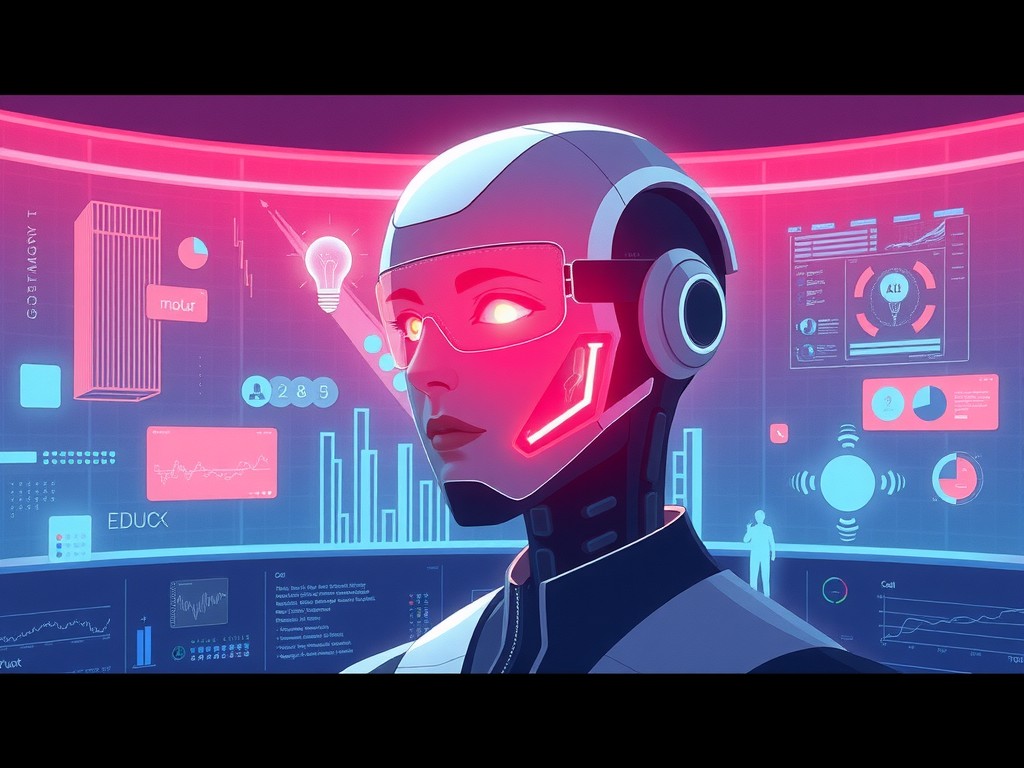
The rapid advancement of artificial intelligence (AI) and synthetic media technologies has been transforming various aspects of our lives, from entertainment and education to marketing and communication. At the forefront of this revolution lies the convergence of AI and synthetic media, a synergy that is redefining the way we create, consume, and interact with digital content. In this article, we will delve into the intersection of AI and synthetic media, exploring the key concepts, practical implications, and real-world applications of this emerging field.
Key Concepts
To grasp the essence of AI and synthetic media, it's essential to understand the fundamental concepts driving this technology. Synthetic media refers to the creation of artificial digital content, including images, videos, audio, and even entire virtual environments. This content can be generated using various techniques, such as computer graphics, machine learning algorithms, or even human creativity. AI, on the other hand, enables machines to learn from data, recognize patterns, and make decisions autonomously. When combined, AI and synthetic media form a powerful partnership, allowing for the creation of highly realistic and engaging digital experiences.
One of the primary applications of AI and synthetic media is in the realm of content creation. With the help of AI algorithms, artists and designers can generate original content, such as images, videos, or music, that are often indistinguishable from those created by humans. This has significant implications for various industries, including entertainment, advertising, and education. For instance, AI-generated content can be used to create realistic special effects in movies and TV shows, or to produce personalized marketing materials that are tailored to individual consumers.
Another key concept in the intersection of AI and synthetic media is the idea of "deepfakes." A deepfake is a type of synthetic media that uses AI algorithms to manipulate and alter existing content, such as images or videos, to create a new, often misleading or deceptive, narrative. Deepfakes can be used to create convincing fake news, propaganda, or even to manipulate public opinion. While the potential applications of deepfakes are vast, they also raise significant concerns about the spread of misinformation and the erosion of trust in digital content.
Practical Implications
The integration of AI and synthetic media has far-reaching implications for various industries and aspects of our lives. In the entertainment industry, AI-generated content can revolutionize the way movies and TV shows are produced, potentially reducing costs and increasing creativity. In marketing, AI-generated content can help businesses create personalized and engaging ads that resonate with their target audience. However, the increasing presence of AI-generated content also raises concerns about the authenticity and trustworthiness of digital content.
In the realm of education, AI and synthetic media can enhance the learning experience by creating immersive and interactive environments that simulate real-world scenarios. For instance, AI-generated virtual reality experiences can be used to teach complex concepts in medicine, engineering, or even history. However, the reliance on AI-generated content also raises questions about the value of human creativity and the importance of original thought.
How it Works in Practice
To illustrate the power of AI and synthetic media, let's consider a scenario where a movie production company uses AI algorithms to generate realistic special effects for a blockbuster film. The company's team of artists and designers work together with AI developers to create a set of parameters that define the desired look and feel of the special effects. The AI algorithm then generates a vast array of possible scenarios, which are reviewed and refined by the human team to create a final product that is both realistic and engaging.
In another example, a marketing agency uses AI-generated content to create personalized ads for a major brand. The agency's team of data analysts and AI developers work together to create a set of parameters that define the target audience and the desired message. The AI algorithm then generates a series of ads that are tailored to individual consumers, taking into account their demographics, interests, and behavior.
FAQ
Q: Is AI-generated content always indistinguishable from human-created content?
A: While AI-generated content can be highly realistic, it's not always indistinguishable from human-created content. The quality of AI-generated content depends on the complexity of the task, the quality of the training data, and the expertise of the developers who created the AI algorithm.
Q: Can AI-generated content be used to manipulate or deceive people?
A: Yes, AI-generated content can be used to create deepfakes that manipulate or deceive people. This raises significant concerns about the spread of misinformation and the erosion of trust in digital content.
Q: Is AI-generated content replacing human creativity?
A: Not necessarily. While AI-generated content can augment human creativity, it's not a replacement for human imagination and original thought. AI algorithms can generate content that is highly realistic, but it's often lacking in emotional depth and nuance.
Q: Can AI-generated content be used for malicious purposes?
A: Yes, AI-generated content can be used for malicious purposes, such as creating fake news or propaganda. This raises significant concerns about the potential misuse of AI-generated content and the need for regulations and guidelines to prevent its misuse.
Conclusion
The intersection of AI and synthetic media is a rapidly evolving field that is transforming various aspects of our lives. While the potential applications of AI-generated content are vast, they also raise significant concerns about the authenticity and trustworthiness of digital content. As we move forward in this era of rapid technological change, it's essential to prioritize transparency, accountability, and responsible innovation to ensure that the benefits of AI and synthetic media are equitably distributed and that their risks are mitigated. By embracing the possibilities and challenges of this emerging field, we can create a future where AI-generated content enhances our lives, rather than degrades them.