Cloud vs Local AI Image Generation: Cost Breakdown
Admin
Introduction
The rapid advancement of artificial intelligence (AI) has led to the development of sophisticated tools for image generation. These tools can create realistic and customized images with unparalleled speed and efficiency. However, when it comes to implementing these tools in real-world applications, businesses and individuals are faced with a crucial decision: whether to opt for cloud-based AI image generation or local AI image generation. The choice between these two options is not just about the quality of the generated images but also about the cost implications. In this article, we will delve into the world of AI image generation, exploring the key concepts, practical implications, and cost breakdown of cloud versus local AI image generation.
Key concepts
AI image generation is a subset of AI that involves the use of algorithms and machine learning techniques to create new images from scratch. These algorithms are trained on vast datasets of images, which enables them to learn the patterns and structures of visual data. The generated images can range from simple sketches to highly realistic photographs. The two primary approaches to AI image generation are Generative Adversarial Networks (GANs) and Variational Autoencoders (VAEs).
GANs consist of two neural networks that work together to generate new images. One network, the generator, creates images based on a random input, while the other network, the discriminator, evaluates the generated images and determines whether they are realistic or not. This process is repeated multiple times, with the generator and discriminator competing against each other to produce increasingly realistic images.
VAEs, on the other hand, use a single neural network to generate images. The network takes a random input and produces a compressed representation of the input, which is then decoded to generate a new image. VAEs are often used for image compression and reconstruction.
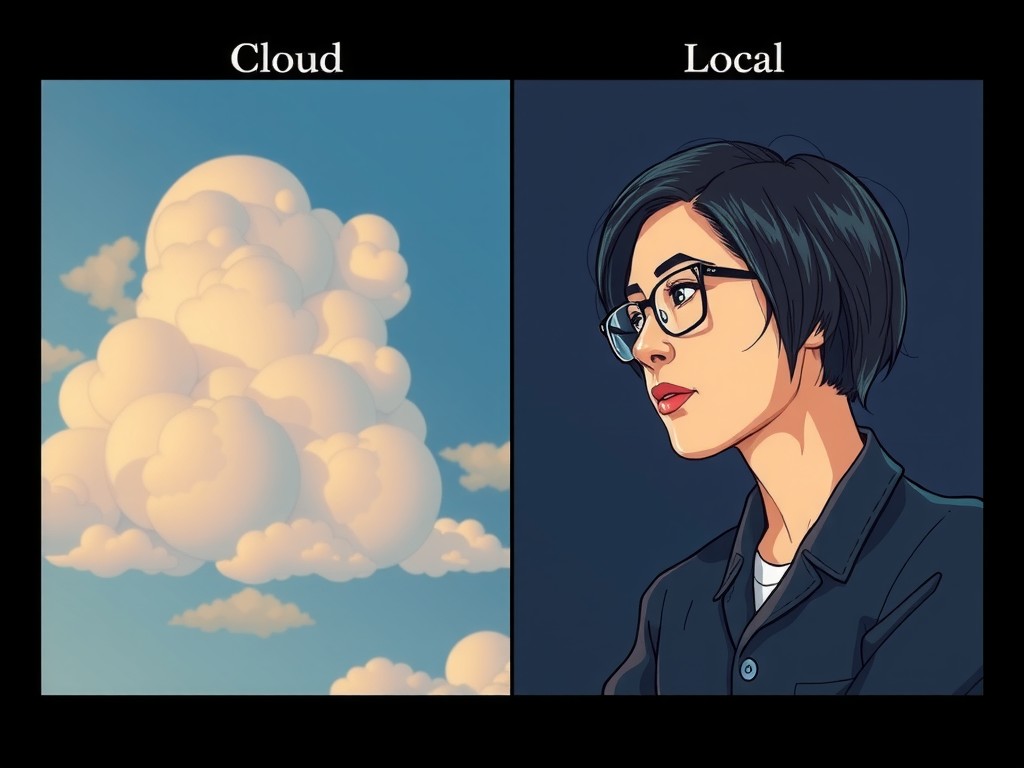
When it comes to deploying AI image generation tools, businesses and individuals have two primary options: cloud-based solutions and local installations. Cloud-based solutions involve storing and processing data on remote servers, which can be accessed through the internet. Local installations, on the other hand, involve storing and processing data on a physical machine or device.
Cloud-based AI image generation
Cloud-based AI image generation involves storing and processing data on remote servers, which can be accessed through the internet. This approach offers several advantages, including scalability, flexibility, and cost-effectiveness. Cloud-based solutions can be easily scaled up or down to meet changing demands, and users can access the necessary resources without having to invest in expensive hardware.
One of the most popular cloud-based AI image generation platforms is Google Cloud AI Platform. This platform provides a range of pre-trained models and tools for image generation, including GANs and VAEs. Users can upload their images and generate new ones using the platform's intuitive interface.
Another popular cloud-based solution is Amazon SageMaker. This platform provides a range of pre-trained models and tools for image generation, including GANs and VAEs. Users can upload their images and generate new ones using the platform's intuitive interface.
Cloud-based solutions also offer several cost benefits, including pay-as-you-go pricing and reduced infrastructure costs. Users only pay for the resources they use, which can help reduce costs and improve profitability.
However, cloud-based solutions also have several drawbacks, including dependence on internet connectivity and potential security risks. If the internet connection is slow or unreliable, the image generation process can be slow and unreliable. Additionally, storing sensitive data on remote servers can pose security risks, particularly if the data is not properly encrypted.
Local AI image generation
Local AI image generation involves storing and processing data on a physical machine or device. This approach offers several advantages, including data security and control. Users have complete control over their data and can ensure that it is properly encrypted and stored.
One of the most popular local AI image generation tools is TensorFlow. This open-source platform provides a range of pre-trained models and tools for image generation, including GANs and VAEs. Users can upload their images and generate new ones using the platform's intuitive interface.
Another popular local solution is PyTorch. This open-source platform provides a range of pre-trained models and tools for image generation, including GANs and VAEs. Users can upload their images and generate new ones using the platform's intuitive interface.
Local solutions also offer several cost benefits, including reduced infrastructure costs and improved data security. Users do not have to invest in expensive hardware or pay for cloud storage, which can help reduce costs and improve profitability.
However, local solutions also have several drawbacks, including limited scalability and potential hardware constraints. If the machine or device is not powerful enough, the image generation process can be slow and unreliable. Additionally, storing sensitive data on a physical device can pose security risks, particularly if the device is not properly secured.
Cost breakdown
The cost breakdown of cloud versus local AI image generation depends on several factors, including the type of hardware or infrastructure used, the complexity of the image generation task, and the number of users. However, in general, cloud-based solutions tend to be more cost-effective than local installations.
Cloud-based solutions offer pay-as-you-go pricing, which means that users only pay for the resources they use. This can help reduce costs and improve profitability. Additionally, cloud-based solutions often provide free trials and discounts for large-scale deployments, which can help reduce costs even further.
Local installations, on the other hand, require a significant upfront investment in hardware and infrastructure. Users must invest in powerful machines or devices that can handle the image generation task, which can be expensive. Additionally, local installations require ongoing maintenance and support, which can add to the overall cost.
However, local installations also offer several cost benefits, including reduced infrastructure costs and improved data security. Users do not have to pay for cloud storage or internet connectivity, which can help reduce costs and improve profitability.
Practical implications
The choice between cloud-based and local AI image generation has several practical implications for businesses and individuals. Cloud-based solutions are ideal for applications that require scalability and flexibility, such as image generation for e-commerce websites or social media platforms. Local installations, on the other hand, are ideal for applications that require data security and control, such as medical imaging or financial analysis.
In terms of cost, cloud-based solutions tend to be more cost-effective than local installations. However, local installations can offer several cost benefits, including reduced infrastructure costs and improved data security. Ultimately, the choice between cloud-based and local AI image generation depends on the specific needs and requirements of the application.
How it works in practice
To illustrate the differences between cloud-based and local AI image generation, let us consider a real-world example. A company called "Fashionista" wants to generate images of new clothing designs for its e-commerce website. The company has a large dataset of images of clothing designs and wants to use AI to generate new images that can be used on its website.
Fashionista decides to use a cloud-based solution, such as Google Cloud AI Platform, to generate the images. The company uploads its dataset to the platform and uses the pre-trained GAN model to generate new images. The generated images are then stored on the platform and can be accessed through the internet.
Alternatively, Fashionista could have decided to use a local installation, such as TensorFlow, to generate the images. The company would have had to invest in powerful machines or devices that can handle the image generation task, and would have had to store the dataset locally. The generated images would have been stored on the local machine or device and would not have been accessible through the internet.
In this example, the cloud-based solution is more cost-effective and scalable than the local installation. However, the local installation offers several benefits, including improved data security and control.
FAQ
Q: What is the difference between cloud-based and local AI image generation?
A: Cloud-based AI image generation involves storing and processing data on remote servers, which can be accessed through the internet. Local AI image generation, on the other hand, involves storing and processing data on a physical machine or device.
Q: Which approach is more cost-effective?
A: Cloud-based solutions tend to be more cost-effective than local installations. Cloud-based solutions offer pay-as-you-go pricing, which means that users only pay for the resources they use. Local installations, on the other hand, require a significant upfront investment in hardware and infrastructure.
Q: Which approach offers better data security?
A: Local installations offer better data security than cloud-based solutions. Users have complete control over their data and can ensure that it is properly encrypted and stored. Cloud-based solutions, on the other hand, require users to store sensitive data on remote servers, which can pose security risks.
Q: Which approach is more scalable?
A: Cloud-based solutions are more scalable than local installations. Cloud-based solutions can easily be scaled up or down to meet changing demands, and users can access the necessary resources without having to invest in expensive hardware.
Conclusion
The choice between cloud-based and local AI image generation depends on several factors, including cost, scalability, and data security. Cloud-based solutions offer several advantages, including pay-as-you-go pricing and reduced infrastructure costs. However, local installations offer several benefits, including improved data security and control. Ultimately, the choice between cloud-based and local AI image generation depends on the specific needs and requirements of the application. By understanding the key concepts, practical implications, and cost breakdown of cloud versus local AI image generation, businesses and individuals can make informed decisions about which approach to use in their specific applications.