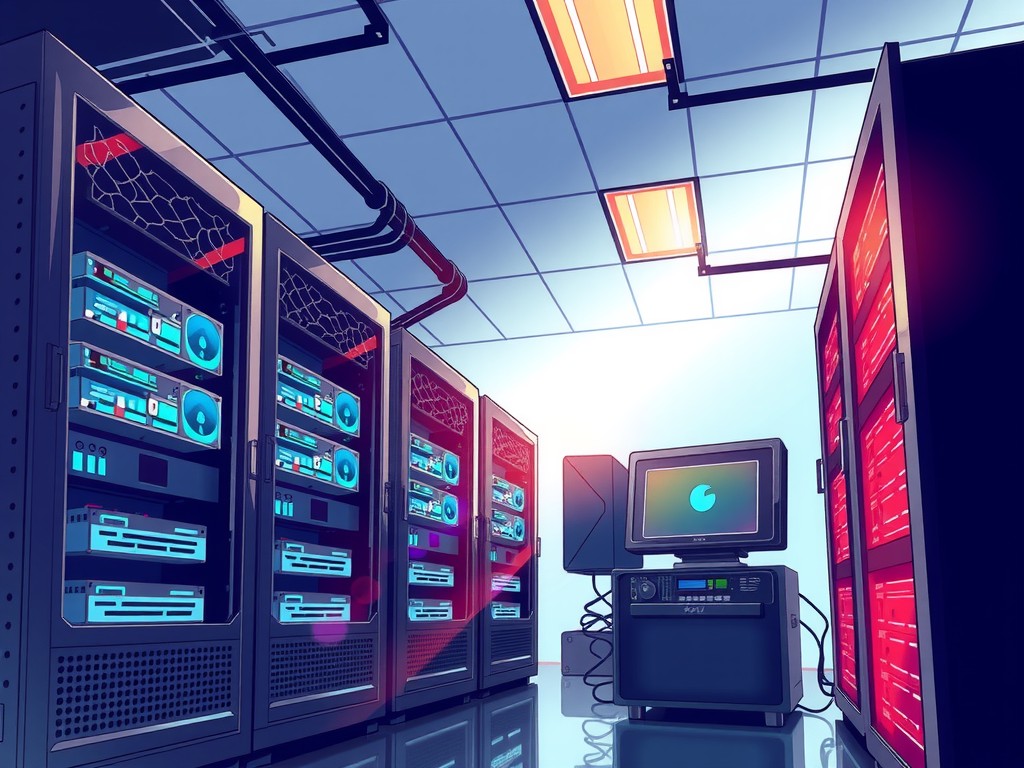
The rapid growth of artificial intelligence (AI) has led to an increased demand for powerful servers capable of processing large amounts of data. As AI applications continue to advance and become more sophisticated, the need for robust and efficient cooling systems has become a critical concern. The relationship between power requirements and cooling in AI servers is a complex one, and understanding it is essential for anyone involved in the development, deployment, or management of AI systems. In this article, we will explore the key concepts, practical implications, and real-world examples of how cooling and power requirements impact AI servers.
Key Concepts
To begin with, let's define some key terms. AI servers are specialized computers designed to handle the intense computational demands of AI workloads. These workloads can include tasks such as machine learning, natural language processing, and computer vision. The power requirements for AI servers are directly related to the type and complexity of these workloads. In general, AI workloads are computationally intensive and require significant amounts of processing power, memory, and storage.
The cooling requirements for AI servers are also closely tied to the power requirements. As AI servers consume more power, they generate more heat, which can lead to reduced performance, increased maintenance costs, and even equipment failure. To mitigate these risks, AI servers often employ advanced cooling systems, such as liquid cooling, air cooling, or a combination of both.
Another critical factor to consider is the concept of "compute density," which refers to the amount of processing power per unit of volume. As AI workloads continue to grow in complexity, the need for higher compute density has become increasingly important. This has led to the development of more compact and energy-efficient AI servers, which are designed to deliver higher performance while minimizing power consumption and heat generation.
Practical Implications
The practical implications of cooling and power requirements in AI servers are far-reaching and impact various aspects of the industry. For instance, the high power consumption of AI servers can lead to significant energy costs, which can be a major concern for organizations with large AI infrastructure deployments. Additionally, the heat generated by AI servers can pose a challenge for data center operators, who must ensure that their facilities can maintain a safe and stable operating environment.
Furthermore, the cooling requirements for AI servers can also impact the overall design and architecture of data centers. To address these concerns, data center operators are increasingly adopting innovative cooling solutions, such as phase-change materials, evaporative cooling, and even rooftop solar panels to reduce their energy consumption and carbon footprint.
The impact of cooling and power requirements in AI servers also extends to the world of cloud computing. Cloud providers must balance the need for high-performance AI infrastructure with the requirement for energy efficiency and sustainability. This has led to the development of specialized cloud services, such as Google's Cloud AI Platform and Amazon's SageMaker, which offer optimized AI infrastructure and cooling solutions for customers.
How it Works in Practice
To illustrate the importance of cooling and power requirements in AI servers, let's consider a real-world example. Imagine a large financial institution that has deployed an AI platform to analyze customer behavior and predict stock market trends. The AI platform consists of a cluster of 100 AI servers, each with a power consumption of 1.5 kW. The total power consumption of the cluster is therefore 150 kW, which can generate a significant amount of heat.
To mitigate this risk, the institution has installed a liquid cooling system that circulates a coolant through the servers, absorbing heat and transferring it to a central heat exchanger. The heat exchanger then dissipates the heat to the surrounding environment, ensuring that the servers operate within a safe temperature range.
However, as the institution continues to grow its AI infrastructure, the cooling requirements become increasingly challenging. To address this, the institution decides to adopt a hybrid cooling solution that combines liquid cooling with air cooling. The liquid cooling system continues to handle the high-heat-generating AI servers, while the air cooling system is used to cool the lower-heat-generating servers.
FAQ
Q: How do I determine the cooling requirements for my AI server?
A: To determine the cooling requirements for your AI server, you need to consider the power consumption of the server, the ambient temperature, and the desired temperature range for the server. You can use online calculators or consult with a cooling expert to determine the required cooling capacity.
Q: What are the benefits of liquid cooling versus air cooling?
A: Liquid cooling offers several benefits over air cooling, including higher heat transfer rates, improved reliability, and reduced maintenance costs. However, liquid cooling also requires a more complex installation and can be more expensive than air cooling.
Q: How can I optimize my AI server's power consumption?
A: To optimize your AI server's power consumption, you can consider using energy-efficient processors, reducing the number of servers, and implementing power-saving features such as dynamic voltage and frequency scaling.
Conclusion
In conclusion, the relationship between cooling and power requirements in AI servers is a complex one that requires careful consideration. By understanding the key concepts, practical implications, and real-world examples, organizations can make informed decisions about their AI infrastructure and ensure that their servers operate efficiently, reliably, and sustainably. As the demand for AI continues to grow, the need for innovative cooling solutions and energy-efficient AI servers will only continue to increase. By staying ahead of the curve, organizations can unlock the full potential of AI and drive business success.