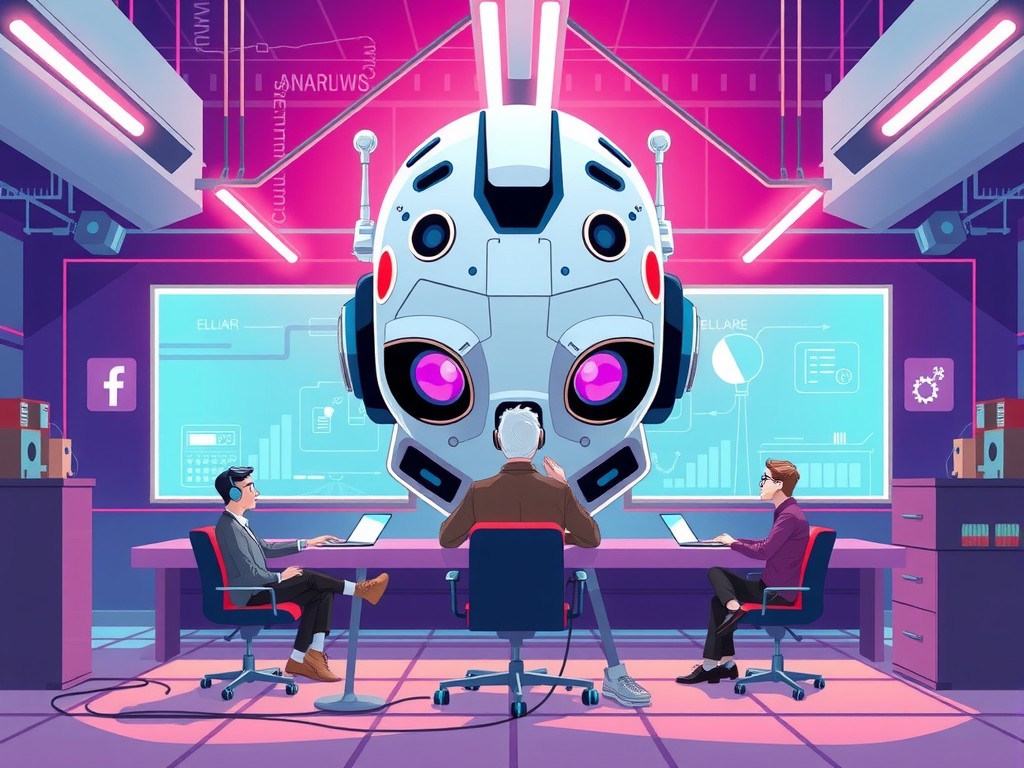
The advent of artificial intelligence (AI) has brought about a profound shift in various sectors, including the creative industries. From graphic design to music composition, AI-powered tools are increasingly being used to augment human creativity, streamline workflows, and push the boundaries of artistic expression. As AI continues to advance, it's essential to understand how it's changing the way creative professionals work. In this article, we'll delve into the world of AI-powered creative workflows, exploring the key concepts, practical implications, and real-world applications of this rapidly evolving field.
Key Concepts
Before we dive into the nitty-gritty of AI-powered creative workflows, it's essential to grasp the underlying concepts. At its core, AI refers to the development of computer systems that can perform tasks that typically require human intelligence, such as learning, problem-solving, and decision-making. In the context of creative industries, AI is being used to automate repetitive tasks, provide inspiration, and even generate original content.
One of the key concepts driving AI-powered creative workflows is machine learning (ML). ML is a subset of AI that enables systems to learn from data, identify patterns, and make predictions or decisions based on that data. In the creative industries, ML algorithms are being used to analyze large datasets, recognize patterns, and generate insights that inform artistic decisions.
Another crucial concept is generative adversarial networks (GANs). GANs are a type of ML algorithm that consists of two neural networks: a generator and a discriminator. The generator creates new data samples, while the discriminator evaluates the generated samples and provides feedback to the generator. GANs have been used to generate realistic images, music, and even videos, pushing the boundaries of what's possible in the creative industries.
Practical Implications
The practical implications of AI-powered creative workflows are far-reaching and multifaceted. For one, AI-powered tools are enabling creatives to work more efficiently, automating tasks such as data analysis, color correction, and even music composition. This frees up time for creatives to focus on high-level tasks, such as conceptualization, strategy, and innovation.
Another significant implication of AI-powered creative workflows is the democratization of creativity. With AI-powered tools, individuals without extensive artistic training can create high-quality content, democratizing access to creative expression. This has significant implications for industries such as graphic design, video production, and music composition, where AI-powered tools are making it possible for non-professionals to compete with established creatives.
AI-powered creative workflows also raise important questions about authorship and ownership. As AI-generated content becomes increasingly prevalent, it's essential to establish clear guidelines around who owns the rights to AI-generated work. This is a complex issue, with far-reaching implications for the creative industries and beyond.
How it Works in Practice
To illustrate the practical applications of AI-powered creative workflows, let's consider a few examples.
In the world of graphic design, AI-powered tools such as Adobe Fresco and Autodesk Sketchbook are being used to automate tasks such as color correction, shape recognition, and even entire design elements. These tools use ML algorithms to analyze data, identify patterns, and make predictions about design elements, freeing up designers to focus on high-level creative decisions.
In the music industry, AI-powered tools such as AIVA and Amper Music are being used to generate original music compositions. These tools use GANs to analyze data, recognize patterns, and generate new music samples. This has significant implications for the music industry, where AI-generated music is increasingly being used in film, television, and even advertising.
In the world of video production, AI-powered tools such as Lumen5 and Wibbitz are being used to automate tasks such as video editing, color correction, and even entire video production workflows. These tools use ML algorithms to analyze data, identify patterns, and make predictions about video elements, freeing up producers to focus on high-level creative decisions.
FAQ
Q: Will AI-powered creative workflows replace human creatives?
A: While AI-powered tools are increasingly being used to automate tasks, they're not replacing human creatives. Instead, they're augmenting human creativity, freeing up time for high-level tasks and enabling creatives to focus on what they do best.
Q: Can AI-generated content be trusted?
A: AI-generated content can be of high quality, but it's essential to establish clear guidelines around authorship and ownership. As AI-generated content becomes increasingly prevalent, it's essential to establish clear guidelines around who owns the rights to AI-generated work.
Q: Will AI-powered creative workflows change the way we consume creative content?
A: Yes, AI-powered creative workflows are changing the way we consume creative content. With AI-generated content becoming increasingly prevalent, we're seeing new forms of creative expression emerge, from AI-generated music to AI-generated art. This has significant implications for the creative industries and beyond.
Conclusion
AI-powered creative workflows are revolutionizing the way creatives work, enabling them to work more efficiently, automate tasks, and push the boundaries of artistic expression. As AI continues to advance, it's essential to stay ahead of the curve, understanding the key concepts, practical implications, and real-world applications of this rapidly evolving field. Whether you're a seasoned creative professional or just starting out, AI-powered creative workflows offer a wealth of opportunities for innovation, creativity, and growth.