How to Reduce AI Image Generation Costs with NVIDIA GPUs
Admin
Introduction
The advent of artificial intelligence (AI) has revolutionized numerous industries, including computer vision and image generation. AI algorithms can now create stunning images, from photorealistic landscapes to abstract art, at unprecedented speeds and with remarkable accuracy. However, as the demand for AI-generated images continues to grow, so do the costs associated with generating them. For organizations and individuals relying on AI image generation, the high costs can be a significant barrier to entry. In this article, we will explore the topic of reducing AI image generation costs with NVIDIA GPUs.
Key concepts
Before diving into the practical implications of reducing AI image generation costs with NVIDIA GPUs, it's essential to understand the key concepts involved. AI image generation relies on complex neural networks that process vast amounts of data to produce high-quality images. These neural networks are typically trained on large datasets and require significant computational resources to function. The most popular AI image generation models, such as Generative Adversarial Networks (GANs) and Variational Autoencoders (VAEs), are known for their high computational requirements and power consumption.
GPU-accelerated computing has become a crucial component in AI image generation. Graphics Processing Units (GPUs) are designed to handle parallel computations, making them an ideal choice for neural network training and inference. NVIDIA GPUs, in particular, have become the industry standard for AI workloads due to their high performance, power efficiency, and scalability. By leveraging NVIDIA GPUs, organizations can significantly reduce the time and cost associated with AI image generation.
Practical implications
The high costs associated with AI image generation can have significant practical implications for organizations and individuals. For businesses, the cost of generating high-quality images can be a major constraint on the scale and scope of their AI image generation projects. This can limit their ability to explore new use cases, innovate, and stay competitive in the market. Furthermore, the high costs can also lead to resource constraints, forcing organizations to prioritize projects and allocate limited resources inefficiently.
For individuals, the high costs can be a significant barrier to entry in the field of AI image generation. Hobbyists and enthusiasts may struggle to access the necessary computational resources to experiment with AI image generation, limiting their ability to explore their creativity and innovate. Furthermore, the high costs can also lead to frustration and disappointment, as individuals may be unable to achieve the desired results due to resource constraints.
How it works in practice
To illustrate the practical implications of reducing AI image generation costs with NVIDIA GPUs, let's consider a real-world example. A company called "Dreamscapes" specializes in generating photorealistic images of fantasy landscapes for use in video games, movies, and advertising. Dreamscapes uses a combination of NVIDIA GPUs and cloud computing to generate high-quality images at scale.
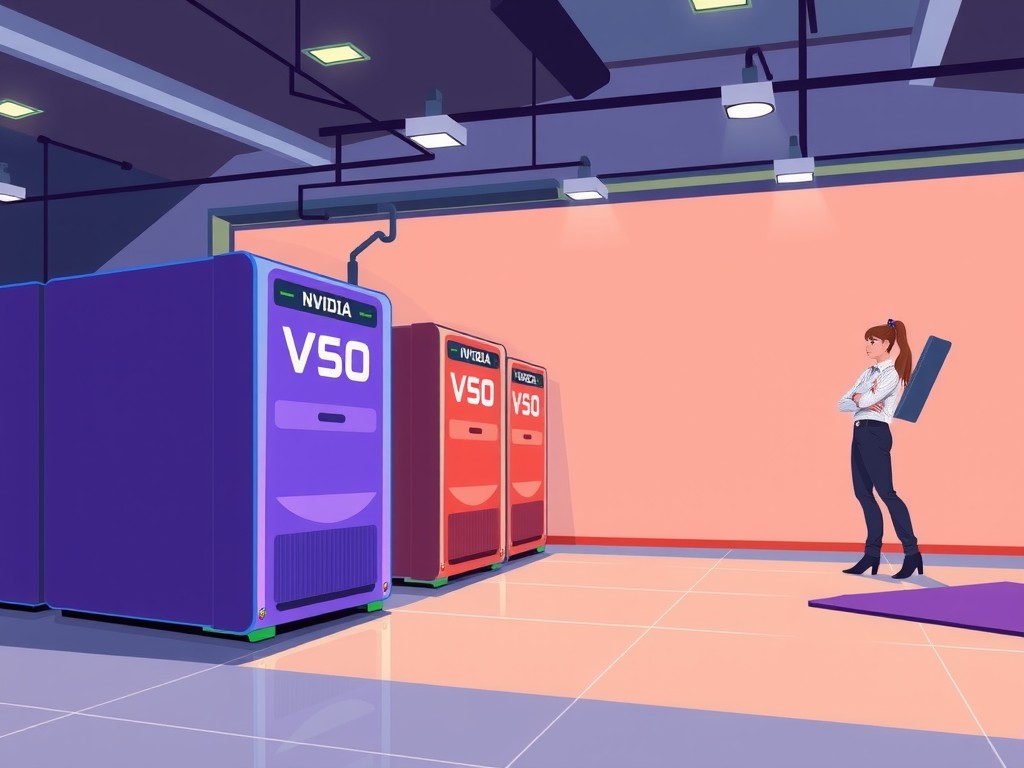
Initially, Dreamscapes relied on a single NVIDIA Tesla V100 GPU to generate images, which resulted in high costs and long processing times. However, as the demand for their services grew, they realized the need for a more scalable and cost-effective solution. By leveraging NVIDIA's GPU-accelerated computing and cloud computing, Dreamscapes was able to deploy a cluster of NVIDIA Tesla V100 GPUs, significantly reducing their processing times and costs.
Today, Dreamscapes can generate high-quality images in a fraction of the time and at a fraction of the cost. Their clients can access a vast library of images, and the company can focus on innovation and growth, rather than resource constraints. The success of Dreamscapes is a testament to the power of NVIDIA GPUs in reducing AI image generation costs and enabling organizations to scale their operations.
Optimizing AI image generation with NVIDIA GPUs
So, how can organizations optimize their AI image generation workflows with NVIDIA GPUs? There are several strategies that can be employed to reduce costs and improve performance. Firstly, organizations can leverage NVIDIA's GPU-accelerated computing to accelerate neural network training and inference. This can be achieved through the use of NVIDIA's CUDA and cuDNN libraries, which provide optimized implementations of popular deep learning frameworks such as TensorFlow and PyTorch.
Secondly, organizations can take advantage of NVIDIA's cloud computing services, such as NVIDIA DGX-1 and NVIDIA DGX A100, which provide scalable and on-demand access to high-performance computing resources. These services allow organizations to deploy NVIDIA GPUs in the cloud, reducing the need for on-premises infrastructure and minimizing costs.
Thirdly, organizations can explore the use of NVIDIA's GPU-accelerated computing in combination with other optimization techniques, such as model pruning and knowledge distillation. These techniques can help reduce the computational requirements of neural networks, making them more suitable for smaller-scale deployments and reducing costs.
FAQ
Q: What are the benefits of using NVIDIA GPUs for AI image generation?
A: NVIDIA GPUs offer several benefits for AI image generation, including high performance, power efficiency, and scalability. They are designed to handle parallel computations, making them an ideal choice for neural network training and inference. By leveraging NVIDIA GPUs, organizations can significantly reduce the time and cost associated with AI image generation.
Q: Can I use NVIDIA GPUs in the cloud to reduce costs?
A: Yes, NVIDIA offers cloud computing services, such as NVIDIA DGX-1 and NVIDIA DGX A100, which provide scalable and on-demand access to high-performance computing resources. These services allow organizations to deploy NVIDIA GPUs in the cloud, reducing the need for on-premises infrastructure and minimizing costs.
Q: What are the limitations of using NVIDIA GPUs for AI image generation?
A: While NVIDIA GPUs offer several benefits for AI image generation, they are not without limitations. The high costs associated with NVIDIA GPUs can be a significant barrier to entry for some organizations. Additionally, the complexity of deploying and managing NVIDIA GPUs can require significant expertise and resources.
Conclusion
The high costs associated with AI image generation can be a significant barrier to entry for organizations and individuals. However, by leveraging NVIDIA GPUs and cloud computing, organizations can significantly reduce their costs and improve their performance. As the demand for AI-generated images continues to grow, the need for scalable and cost-effective solutions will only increase. By understanding the key concepts, practical implications, and optimization strategies involved in reducing AI image generation costs with NVIDIA GPUs, organizations can unlock the full potential of AI image generation and drive innovation and growth.