NVIDIA GPU Power Consumption for AI Workloads: A Comprehensive Overview
Introduction
The rapid growth of artificial intelligence (AI) has led to an increased demand for powerful computing resources. Graphics processing units (GPUs) from NVIDIA have become the go-to choice for many AI applications due to their massive parallel processing capabilities. However, one critical aspect of using NVIDIA GPUs for AI workloads is power consumption. As AI models become increasingly complex, the energy required to train and run these models is growing exponentially. In this article, we will delve into the topic of NVIDIA GPU power consumption for AI workloads, exploring the key concepts, practical implications, and real-world scenarios.
Key Concepts
To understand the power consumption of NVIDIA GPUs for AI workloads, it is essential to grasp some fundamental concepts. Firstly, AI workloads are typically computationally intensive, requiring large amounts of processing power to perform complex calculations. These calculations often involve matrix operations, which are executed by the GPU's massively parallel architecture. The GPU's power consumption is influenced by several factors, including the type of workload, the GPU model, and the system configuration.
Another crucial aspect is the concept of "compute density," which refers to the amount of processing power delivered per unit of power consumed. Modern NVIDIA GPUs are designed to achieve high compute densities, enabling them to perform more calculations per watt of power. However, this also means that the power consumption of these GPUs can be substantial, especially when handling demanding AI workloads.
Power Consumption and Energy Efficiency
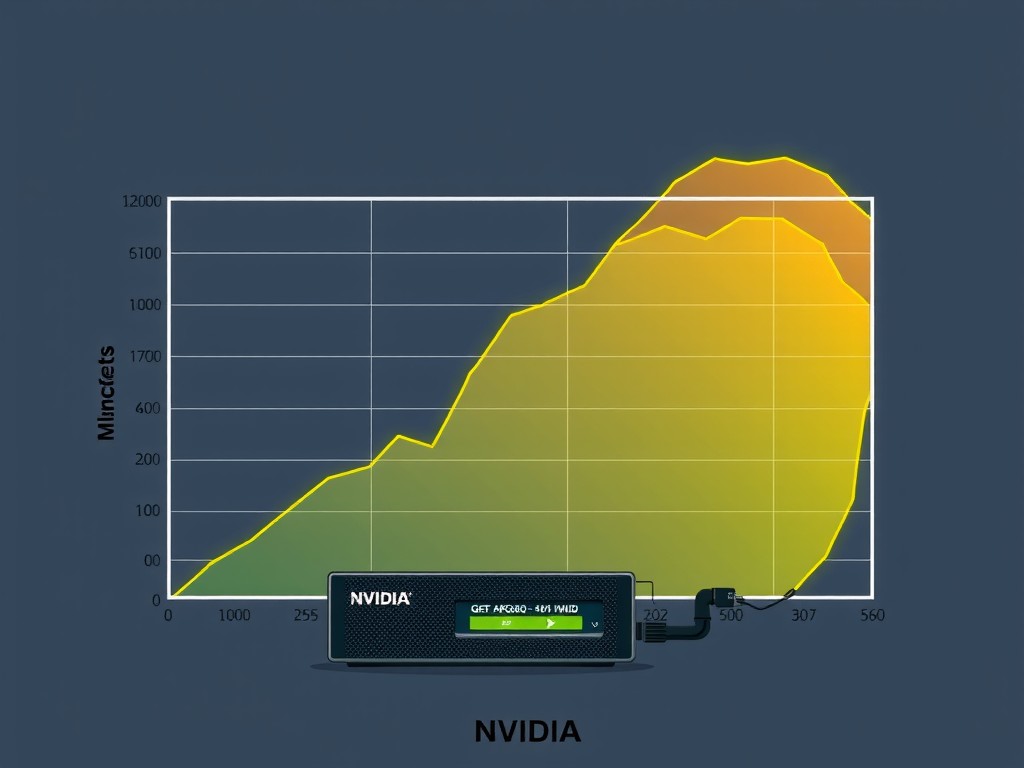
The power consumption of an NVIDIA GPU is typically measured in watts (W). The total system power consumption, including the GPU, motherboard, memory, and other components, is usually higher than the GPU's power consumption alone. To give you a better understanding, let's consider an example. The NVIDIA A100 GPU, for instance, has a peak power consumption of 250 W. However, the total system power consumption can reach up to 400 W or more, depending on the system configuration.
Energy efficiency is a critical aspect of AI computing, as it directly impacts the total cost of ownership (TCO). The TCO includes not only the initial hardware cost but also the operational expenses, such as electricity consumption and cooling costs. As AI workloads continue to grow in complexity, energy efficiency becomes increasingly important to minimize the environmental impact and reduce costs.
Practical Implications
The power consumption of NVIDIA GPUs for AI workloads has significant practical implications for various industries. In the field of deep learning, researchers and developers often rely on powerful GPUs to train and test complex AI models. However, the high power consumption of these GPUs can lead to increased electricity bills and a larger carbon footprint.
In data centers, AI workloads can account for a significant portion of the total energy consumption. As data centers continue to grow in size and complexity, energy efficiency becomes a critical concern. Data center operators must balance the need for high-performance computing with the requirement to minimize energy consumption and reduce costs.
How it Works in Practice
Let's consider a real-world scenario to illustrate how NVIDIA GPU power consumption affects AI workloads. In a data center, a team of researchers is training a complex deep learning model using the NVIDIA A100 GPU. The model requires a massive amount of processing power to train, and the researchers need to achieve a high level of compute density to meet their performance goals.
To achieve this, the researchers configure the system to use multiple GPUs, each connected to a high-performance interconnect. The system is designed to optimize power consumption, using techniques such as dynamic voltage and frequency scaling (DVFS) to minimize energy waste. Despite these efforts, the total system power consumption remains high, reaching up to 1.2 kW.
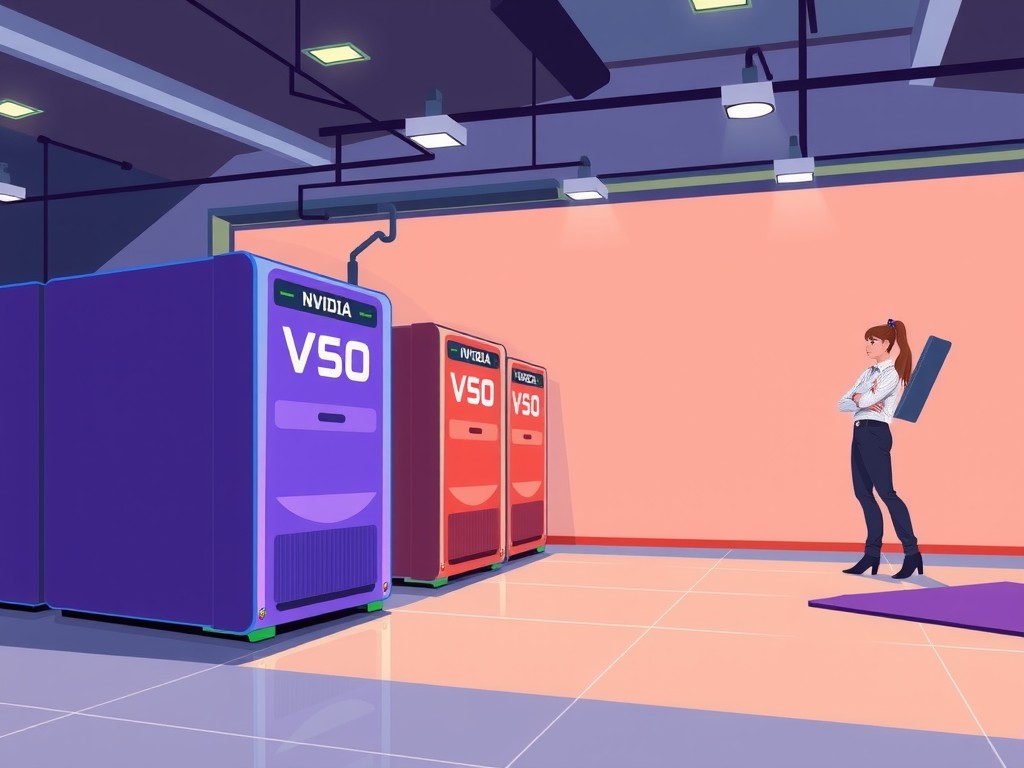
In another scenario, a company is deploying an AI-powered recommendation engine on a cloud-based platform. The engine relies on the NVIDIA V100 GPU to process large amounts of user data and generate personalized recommendations. To minimize energy consumption, the company implements a number of energy-saving strategies, including using a more efficient cooling system and optimizing the GPU's clock speed.
Optimization Techniques
Several optimization techniques can help minimize the power consumption of NVIDIA GPUs for AI workloads. One approach is to use lower-power GPUs or variants that are optimized for specific workloads. For example, the NVIDIA T4 GPU is a more power-efficient variant designed for cloud and edge computing applications.
Another strategy is to implement dynamic power management (DPM), which involves adjusting the power consumption of the GPU based on the workload's requirements. DPM can help reduce power consumption during periods of low activity and minimize energy waste.
FAQ
Q: What is the typical power consumption of an NVIDIA GPU for AI workloads?
A: The power consumption of an NVIDIA GPU for AI workloads can vary significantly depending on the GPU model, system configuration, and workload requirements. However, typical power consumption ranges from 150 W to 250 W for high-end GPUs like the A100.
Q: How do I optimize power consumption for my AI workloads?
A: There are several strategies to optimize power consumption for AI workloads, including using lower-power GPUs, implementing dynamic power management, and optimizing system configuration. Additionally, you can use power-optimized software frameworks and libraries, such as cuDNN and TensorFlow, to minimize energy consumption.
Q: What are the environmental implications of high power consumption for AI workloads?
A: High power consumption for AI workloads can lead to increased greenhouse gas emissions and a larger carbon footprint. As AI computing continues to grow in complexity, energy efficiency becomes increasingly important to minimize the environmental impact and reduce costs.
Conclusion
The power consumption of NVIDIA GPUs for AI workloads has significant practical implications for various industries. As AI computing continues to grow in complexity, energy efficiency becomes increasingly important to minimize the environmental impact and reduce costs. By understanding the key concepts, optimization techniques, and real-world scenarios, developers and researchers can design more energy-efficient AI systems that balance performance and power consumption.
In conclusion, NVIDIA GPU power consumption for AI workloads is a critical aspect of AI computing that requires careful consideration. By embracing energy-efficient design principles, optimization techniques, and power-optimized software frameworks, we can build a more sustainable future for AI computing.