The rapid advancements in artificial intelligence (AI) and machine learning have led to an explosion in the field of AI-generated content, particularly in the realm of image generation. Self-hosted AI image generation refers to the process of creating AI-powered image generation capabilities within one's own infrastructure, rather than relying on cloud-based services. This trend has significant implications for various industries, including art, entertainment, education, and marketing. NVIDIA GPUs have emerged as a crucial component in this field, offering the necessary computational power to handle the complex calculations involved in AI image generation.
In this article, we will delve into the world of NVIDIA GPUs for self-hosted AI image generation, exploring the key concepts, practical implications, and real-world applications of this technology.
Key concepts
To understand the role of NVIDIA GPUs in AI image generation, it's essential to grasp the underlying concepts. AI image generation involves the use of deep learning algorithms, specifically Generative Adversarial Networks (GANs) and Variational Autoencoders (VAEs). These algorithms learn patterns and relationships within large datasets, enabling the generation of new, synthetic images that are often indistinguishable from real ones.
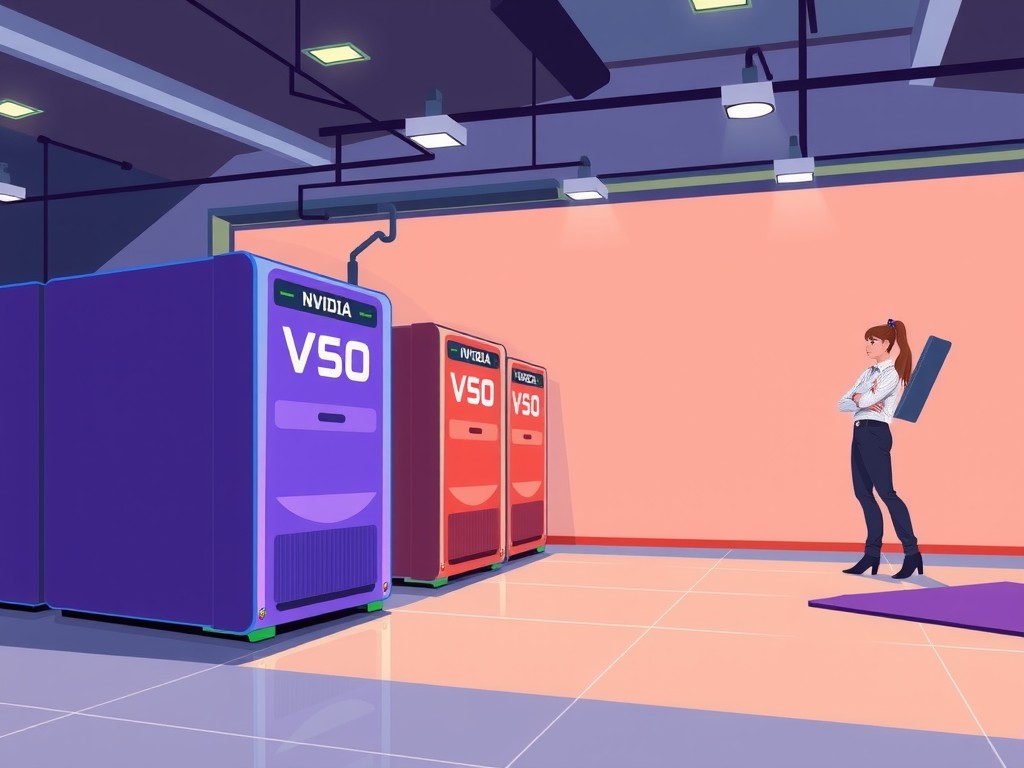
NVIDIA GPUs, particularly the Tesla V100 and A100 models, have become the go-to choice for AI researchers and developers due to their exceptional performance and power efficiency. These GPUs are equipped with thousands of cores, which allow for parallel processing of complex calculations, making them ideal for computationally intensive tasks like AI image generation.
Another critical concept is the concept of "training" and "inference." Training refers to the process of feeding a large dataset into the AI model, allowing it to learn the patterns and relationships within the data. Inference, on the other hand, involves using the trained model to generate new images based on the learned patterns.
Practical implications
The implications of self-hosted AI image generation are far-reaching, with potential applications in various industries. In the art world, AI-generated images can be used to create new and innovative art pieces, blurring the lines between human creativity and machine-generated content. In the entertainment industry, AI-generated images can be used to create realistic special effects, reducing the need for expensive and time-consuming manual animation.
In education, AI-generated images can be used to create interactive and immersive learning experiences, making complex concepts more engaging and accessible to students. In marketing, AI-generated images can be used to create personalized and targeted advertisements, increasing the effectiveness of marketing campaigns.
However, the use of self-hosted AI image generation also raises concerns about the potential misuse of this technology. For instance, AI-generated images can be used to create deepfakes, which are manipulated videos or images that can be used to deceive or manipulate people. This has significant implications for the integrity of elections, journalism, and other critical areas of society.
How it works in practice
To illustrate the process of self-hosted AI image generation using NVIDIA GPUs, let's consider a hypothetical scenario. Suppose we want to generate images of landscapes, such as mountains and beaches, using a dataset of existing images. We would start by collecting a large dataset of images, which would be fed into the AI model for training.
The AI model, which is running on a NVIDIA GPU, would learn the patterns and relationships within the data, enabling it to generate new images that are similar to the training data. This process would involve multiple iterations, with the AI model refining its output based on feedback from the user.
Once the AI model is trained, it can be used to generate new images based on the learned patterns. This would involve feeding the AI model with input parameters, such as the type of landscape, the time of day, and the weather conditions. The AI model would then generate an image that matches the input parameters, which can be used for various purposes, such as art, entertainment, or marketing.
Real-world applications
Self-hosted AI image generation using NVIDIA GPUs has numerous real-world applications. For instance, the company NVIDIA itself has developed a range of AI-powered tools, including the Deep Learning SDK, which enables developers to create AI-powered applications using NVIDIA GPUs.
Another example is the use of AI-generated images in the art world. The artist Robbie Barrat, for instance, has used AI-generated images to create a series of portraits that are often indistinguishable from real ones. This raises important questions about the nature of creativity and authorship in the age of AI-generated content.
FAQ
Q: What is the difference between self-hosted and cloud-based AI image generation?
A: Self-hosted AI image generation involves running AI-powered image generation capabilities within one's own infrastructure, using NVIDIA GPUs or other specialized hardware. Cloud-based AI image generation, on the other hand, involves relying on cloud-based services, such as Amazon Web Services (AWS) or Google Cloud Platform (GCP), to generate images.
Q: What are the benefits of using NVIDIA GPUs for AI image generation?
A: NVIDIA GPUs offer exceptional performance and power efficiency, making them ideal for computationally intensive tasks like AI image generation. They also provide a range of tools and resources, including the Deep Learning SDK, which enables developers to create AI-powered applications.
Q: Can AI-generated images be used to create deepfakes?
A: Yes, AI-generated images can be used to create deepfakes, which are manipulated videos or images that can be used to deceive or manipulate people. However, this raises significant concerns about the misuse of this technology and the need for responsible AI development practices.
Q: What are the potential applications of self-hosted AI image generation?
A: Self-hosted AI image generation has numerous potential applications, including art, entertainment, education, and marketing. It can be used to create new and innovative art pieces, realistic special effects, interactive and immersive learning experiences, and personalized and targeted advertisements.
Conclusion
Self-hosted AI image generation using NVIDIA GPUs is a rapidly evolving field with significant implications for various industries. While it offers numerous benefits, including increased performance and power efficiency, it also raises concerns about the potential misuse of this technology. As we move forward, it's essential to develop responsible AI development practices and ensure that this technology is used for the greater good.
By understanding the key concepts, practical implications, and real-world applications of self-hosted AI image generation, we can unlock the full potential of this technology and create a brighter future for all.