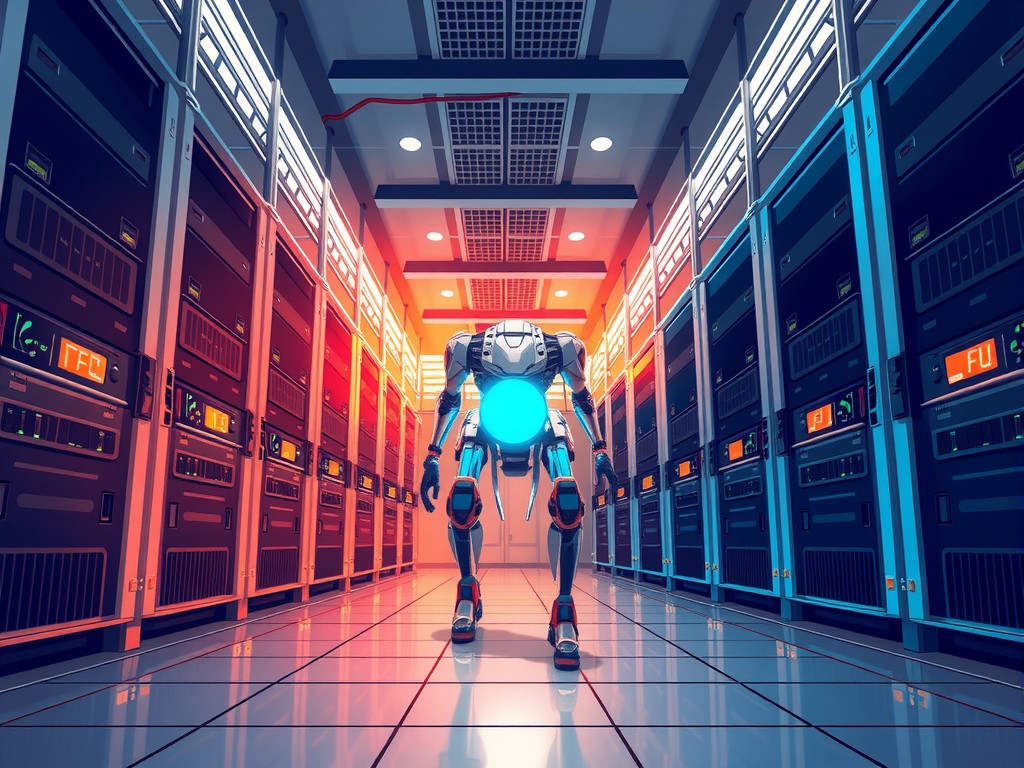
The rise of artificial intelligence (AI) has revolutionized the way businesses operate, from customer service to data analysis. As AI continues to play a vital role in modern industries, the need for efficient and cost-effective infrastructure has become increasingly important. One approach that has gained significant attention in recent years is running AI on bare metal servers. In this article, we will delve into the world of bare metal servers and explore the benefits and implications of running AI on this type of infrastructure.
Key concepts
Before we dive into the details, let's define some key terms. Bare metal servers refer to physical servers that are not virtualized, meaning they are not running on top of a virtualization layer. This type of infrastructure provides direct access to the underlying hardware, which can be beneficial for applications that require low latency and high performance. Virtualized servers, on the other hand, run on top of a hypervisor, which abstracts the underlying hardware and provides a layer of isolation between multiple virtual machines.
Another important concept is the difference between cloud-based and on-premises infrastructure. Cloud-based infrastructure refers to servers and resources that are hosted remotely, accessed over the internet, and typically managed by a third-party provider. On-premises infrastructure, in contrast, refers to servers and resources that are hosted on-site, within an organization's own data center or premises.
Benefits of bare metal servers for AI
So, why are bare metal servers gaining popularity in the AI space? There are several reasons for this trend. Firstly, bare metal servers offer direct access to the underlying hardware, which is particularly beneficial for AI workloads that require low latency and high performance. This is due to the fact that AI applications often involve complex computations and massive amounts of data, which can be challenging to process using virtualized infrastructure.
Another benefit of bare metal servers is their ability to provide dedicated resources to AI workloads. This means that organizations can allocate specific servers and resources to AI applications, ensuring that they have the necessary compute power and memory to run efficiently. In contrast, virtualized infrastructure often involves resource sharing, which can lead to performance bottlenecks and decreased efficiency.
Practical implications
The practical implications of running AI on bare metal servers are significant. For one, organizations can expect to see improved performance and efficiency, particularly for workloads that require low latency and high compute power. This can lead to faster training times, improved model accuracy, and enhanced overall AI capabilities.
Another practical implication is the ability to customize and optimize the infrastructure for specific AI workloads. By having direct access to the underlying hardware, organizations can fine-tune their servers and resources to meet the unique requirements of their AI applications. This can involve tweaking settings, allocating specific resources, and optimizing performance for specific use cases.
How it works in practice
Let's consider a real-world example to illustrate how running AI on bare metal servers works in practice. Suppose an organization wants to develop and deploy a natural language processing (NLP) model for customer service. The model requires massive amounts of data and complex computations to train and run efficiently.
In this scenario, the organization might choose to deploy the NLP model on a bare metal server, which provides direct access to the underlying hardware. This allows the organization to allocate specific resources, such as dedicated CPUs and GPUs, to the model, ensuring that it has the necessary compute power and memory to run efficiently.
The organization might also choose to customize the server settings to optimize performance for the NLP workload. This might involve tweaking settings, such as adjusting the number of CPU cores or allocating specific amounts of memory, to meet the unique requirements of the model.
Security and scalability
While bare metal servers offer many benefits, there are also potential concerns around security and scalability. One of the main challenges is ensuring that the infrastructure is secure and isolated from other workloads. This can involve implementing robust security protocols, such as encryption and firewalls, to prevent unauthorized access and data breaches.
Another challenge is scalability, as bare metal servers can be more difficult to scale and manage than virtualized infrastructure. This can involve implementing automated scaling solutions, such as cloud-based services, to quickly scale up or down as needed.
FAQ
Q: What is the difference between bare metal servers and virtualized servers?
A: Bare metal servers refer to physical servers that are not virtualized, meaning they are not running on top of a virtualization layer. Virtualized servers, on the other hand, run on top of a hypervisor, which abstracts the underlying hardware and provides a layer of isolation between multiple virtual machines.
Q: Why are bare metal servers gaining popularity in the AI space?
A: Bare metal servers offer direct access to the underlying hardware, which is particularly beneficial for AI workloads that require low latency and high performance. They also provide dedicated resources to AI workloads, ensuring that they have the necessary compute power and memory to run efficiently.
Q: Are bare metal servers more expensive than virtualized infrastructure?
A: The cost of bare metal servers can vary depending on the specific requirements and configurations. However, in many cases, bare metal servers can be more cost-effective than virtualized infrastructure, particularly for workloads that require high performance and low latency.
Q: How do I choose the right bare metal server for my AI workload?
A: Choosing the right bare metal server involves considering factors such as performance, scalability, and security. It's essential to evaluate your specific workload requirements and choose a server that meets those needs. You may also want to consider consulting with a cloud provider or infrastructure expert to ensure that you're getting the best possible solution for your needs.
Conclusion
Running AI on bare metal servers offers many benefits, including improved performance, efficiency, and customization. While there are potential challenges around security and scalability, these can be addressed through robust security protocols and automated scaling solutions. As the demand for AI continues to grow, organizations will need to consider the best infrastructure options for their workloads. By choosing the right bare metal server, organizations can unlock the full potential of their AI applications and drive business success.