Why AI Still Struggles With Humans and Faces
Introduction
In recent years, Artificial Intelligence (AI) has made tremendous progress in various fields, from image recognition to natural language processing. However, despite its impressive capabilities, AI still struggles with two fundamental aspects of human experience: humans themselves and faces. This might seem counterintuitive, given the rapid advancements in AI-powered facial recognition systems and the widespread use of AI in customer service chatbots. Nevertheless, the complexities of human emotions, behaviors, and relationships continue to pose significant challenges for AI systems. In this article, we will delve into the reasons behind AI's struggles with humans and faces, exploring the key concepts, practical implications, and real-world examples that illustrate these challenges.Key concepts
To understand why AI struggles with humans and faces, it's essential to grasp the underlying concepts that govern these systems. AI systems, particularly those based on machine learning, rely on data and algorithms to make predictions and decisions. However, these systems are only as good as the data they are trained on, and when it comes to humans and faces, the data is inherently complex and nuanced. One of the primary challenges is the concept of "common sense," which refers to the ability to understand and apply everyday knowledge and experience to real-world situations. Humans take common sense for granted, but AI systems struggle to replicate this ability, often leading to unexpected and inaccurate outcomes. For instance, AI-powered chatbots may not be able to understand the nuances of human language, leading to misinterpretations and misunderstandings. Another critical concept is "contextual understanding," which refers to the ability to understand the context in which a person or a face appears. This includes factors such as emotions, intentions, and relationships, which are all essential aspects of human experience. AI systems often struggle to capture these contextual cues, leading to misinterpretations and errors.Practical implications
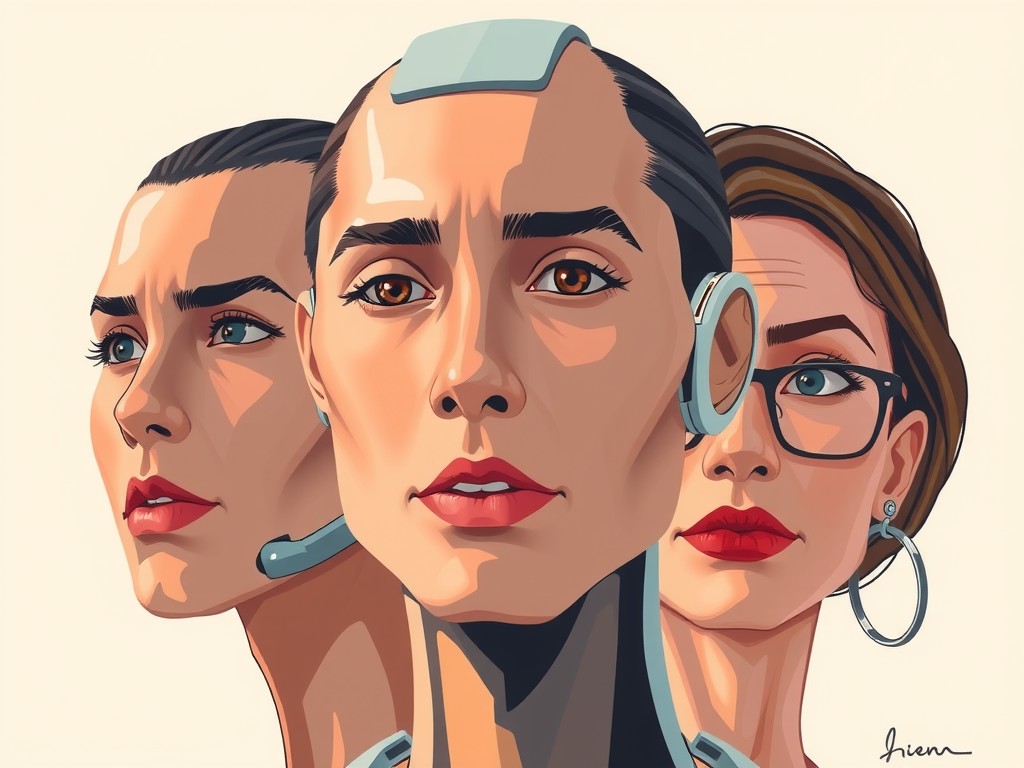
The challenges of AI's struggle with humans and faces have significant practical implications in various industries, including customer service, law enforcement, and healthcare. For example, in the field of customer service, AI-powered chatbots are increasingly being used to handle customer inquiries and issues. However, these systems often struggle to understand the emotional tone and context of customer interactions, leading to misunderstandings and frustration. In law enforcement, AI-powered facial recognition systems are being used to identify suspects and track individuals. However, these systems often struggle to account for variations in lighting, angle, and expression, leading to false positives and misidentifications. This has significant implications for individual rights and liberties, particularly in cases where the accuracy of these systems is called into question. In healthcare, AI-powered systems are being used to analyze medical images and diagnose diseases. However, these systems often struggle to account for the complexities of human anatomy and the nuances of medical imaging, leading to inaccurate diagnoses and misinterpretations.How it works in practice
To illustrate the challenges of AI's struggle with humans and faces, let's consider a hypothetical scenario. Imagine a customer service chatbot that is designed to help customers resolve issues with their purchases. The chatbot is trained on a large dataset of customer interactions, but it struggles to understand the emotional tone and context of these interactions. One customer, Sarah, is frustrated with her purchase and contacts the chatbot to complain. However, the chatbot misinterprets Sarah's language and responds with a generic message that fails to address her concerns. Sarah becomes even more frustrated and contacts the chatbot again, but the system continues to struggle to understand her emotions and intentions. In this scenario, the chatbot's inability to understand human emotions and context leads to a series of misunderstandings and misinterpretations. The chatbot is unable to provide a satisfactory solution to Sarah's problem, leading to a negative customer experience.Real-world examples
The challenges of AI's struggle with humans and faces are not limited to hypothetical scenarios. There are numerous real-world examples that illustrate these challenges. For instance, in 2019, a facial recognition system used by the UK police force misidentified a black woman as a white man, leading to a series of incorrect arrests and detentions. In another example, a customer service chatbot was used to interact with customers in a retail store. However, the chatbot struggled to understand the nuances of human language, leading to a series of misunderstandings and misinterpretations. The chatbot was eventually taken offline due to the negative customer feedback it received.FAQ
Q: Why can't AI systems simply be trained on more data to improve their understanding of humans and faces?
A: While training AI systems on more data can improve their accuracy, it is not a silver bullet solution. The complexities of human emotions, behaviors, and relationships cannot be reduced to a simple dataset, and AI systems require more nuanced and contextual understanding to accurately interpret human interactions.
Q: Can't AI systems be designed to account for the complexities of human emotions and context?
A: Yes, AI systems can be designed to account for the complexities of human emotions and context. However, this requires a more sophisticated and nuanced approach to AI development, one that takes into account the subtleties of human experience and the limitations of machine learning algorithms.
Q: What are the implications of AI's struggle with humans and faces for individual rights and liberties?
A: The implications of AI's struggle with humans and faces for individual rights and liberties are significant. AI-powered systems that misinterpret human emotions and context can lead to misidentifications, false positives, and other errors that have serious consequences for individuals and society as a whole.